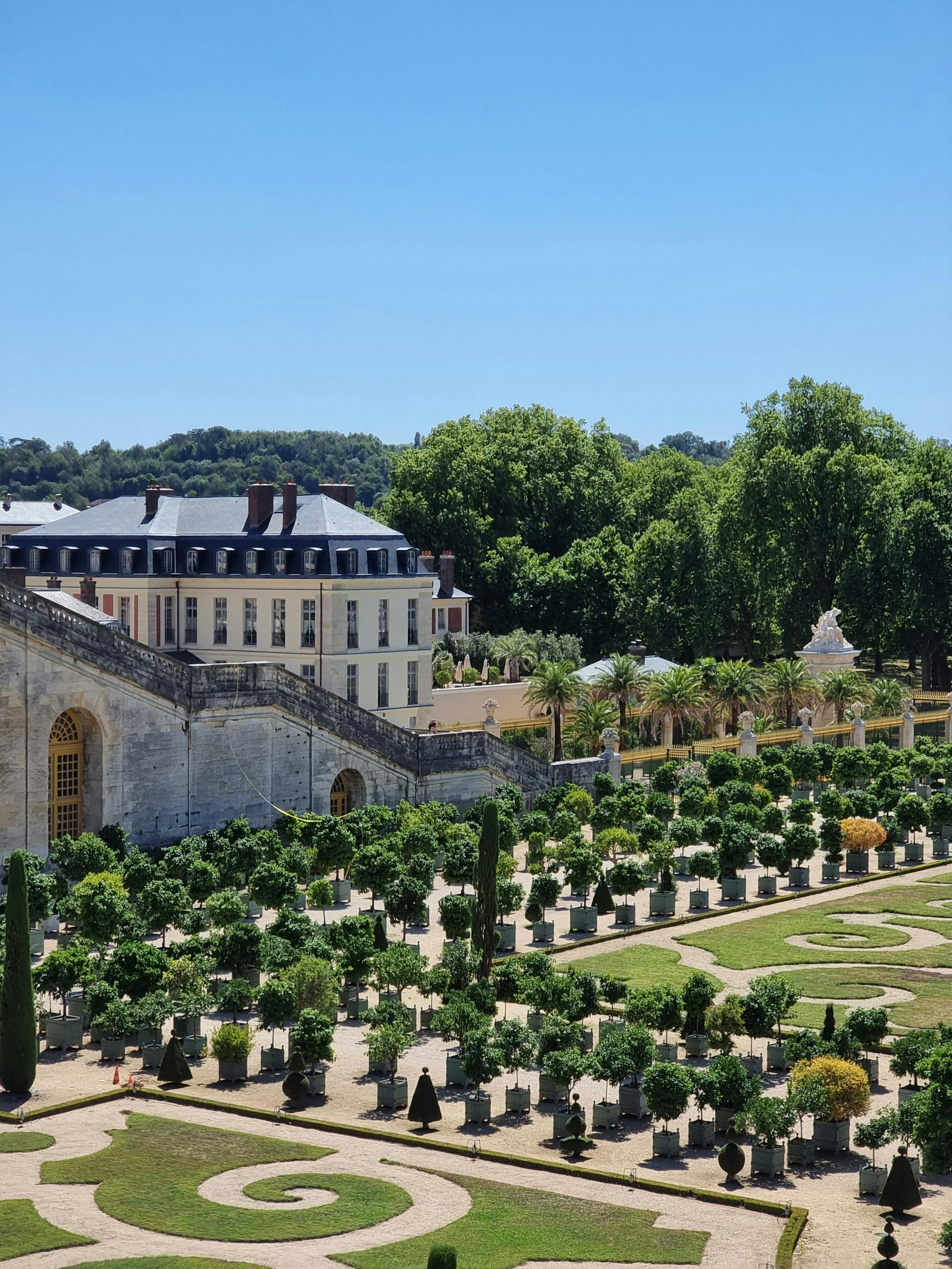
Normandy
Présentation
There is no region of France that carries its history more visibly than Normandy — and none that wears it with more quiet dignity. This is a land shaped by millennia of conquest and creativity, of artistic revelation and profound sacrifice. The same coastline that witnessed the largest amphibious landing in history also inspired Monet to paint his greatest series. The cliffs of Étretat that moved Maupassant to write and Courbet to paint still rise, unchanged, above the Channel. The apple orchards that produce the finest calvados in the world bloom each spring as they have for centuries.
Normandy is a landscape of extraordinary emotional depth. The D-Day beaches — Utah, Omaha, Gold, Juno, Sword — stretch along a coast of unremarkable beauty that conceals the most consequential morning in modern history. To stand at the American Cemetery at Colleville-sur-Mer, above Omaha Beach, in the early morning when the mist is still on the grass and the white crosses recede to the horizon, is an experience of such gravity and such stillness that it permanently changes one's relationship to the word freedom.
But Normandy is also Honfleur, its old harbour unchanged since the 17th century, its quayside still fragrant with salt and fishing rope, its painters still arriving each spring to chase the extraordinary quality of light that Boudin and Monet first described here. It is the abbey of Mont Saint-Michel, rising from the tidal flats of the bay in a vision of medieval ambition that has astonished pilgrims for a thousand years. It is the cream, the cheese, the calvados, and the cider of the Pays d'Auge — a table of Norman generosity that the rest of France has been envying for centuries.
At Safrans de France, we know Normandy in all its registers — the solemn and the joyful, the ancient and the eternal. We are here to help you experience all of it, with the depth and the care it deserves.
Itineraries
Three ways to experience the very best of the region — each one crafted to reveal a different facet of this extraordinary destination.
The D-Day Landings & Normandy's Memory
A journey of profound historical significance, undertaken with the care and the knowledge it deserves. Two days along the D-Day coast — the beaches, the cemeteries, the bunkers and the memorials — guided by a specialist historian who can bring the events of June 6th, 1944 to life with a depth that no guidebook can achieve. The American Cemetery above Omaha Beach at dawn. The Bayeux Tapestry, still miraculously preserved after nine centuries. And the extraordinary pilgrimage to Mont Saint-Michel — rising from the bay in a vision of faith and engineering that puts everything else in perspective. Normandy, at its most moving.

Impressionism, Honfleur & the Côte Fleurie
The journey that the painters made — from the light-drenched quayside of Honfleur, where Boudin first handed a paintbrush to the young Claude Monet, to the cliffs of Étretat that Courbet and Monet painted obsessively, to Giverny, where Monet spent forty years creating the garden that would become the subject of his most celebrated series. A private guided visit to Monet's garden and studio at Giverny, with an art historian who can place the works in their precise physical context, is among the most revelatory experiences in French cultural tourism. Normandy, through the eyes of its artists.
The Complete Normandy
A full week devoted to the extraordinary variety of the most complex region in France. The D-Day beaches and the memorials of the Calvados coast. Mont Saint-Michel at the equinoctial tide. Honfleur and the Côte Fleurie. The cliffs of Étretat. Giverny and the garden that changed the history of painting. And woven through every day, the Norman table — the camembert and the livarot, the cider route through the Pays d'Auge, the calvados aged in oak barrels in cellars that smell of apple and time, the freshest seafood in France eaten at a harbour table with a view of the Channel. Normandy, complete and deeply felt.
Things to See & Do
Normandy rewards those who arrive with curiosity and leave with something they did not expect to feel. Here are the experiences we consider essential — and a few that only insiders know.
The D-Day Beaches — The most important historical sites in France, and perhaps in the world. Omaha Beach, where the losses of June 6th, 1944 were most catastrophic. The American Cemetery at Colleville-sur-Mer, with its 9,387 white marble crosses on a cliff above the sea. Pointe du Hoc, where the cliff face still bears the craters of the naval bombardment. Utah Beach and its excellent museum. A private guided day along the landing coast — with a historian who has devoted his career to this subject — is one of the most important experiences we can arrange for any visitor to France.
Mont Saint-Michel — The most visited site in France after the Palace of Versailles, and the most extraordinary. A medieval abbey perched on a granite island in a bay where the tides are among the strongest in Europe, rising and retreating with a speed that has drowned the unwary for centuries. A private guided visit at first light — before the day visitors arrive, when the abbey belongs entirely to those present — is an experience of rare and lasting beauty.
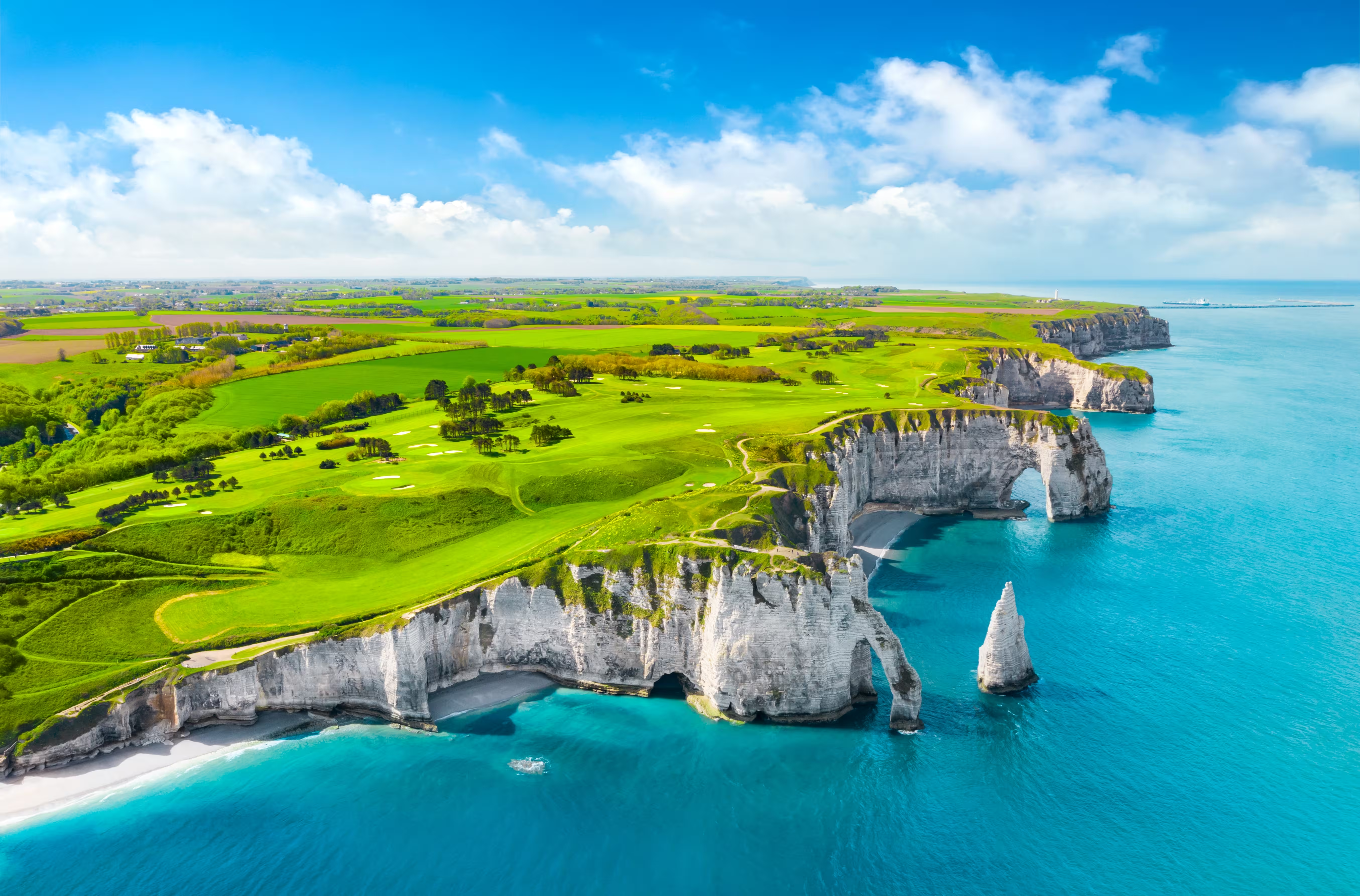
The Cliffs of Étretat — The chalk cliffs of the Alabaster Coast, rising from the Channel in formations of such sculptural beauty that they have been painted, photographed, and written about continuously since the 19th century. The Falaise d'Aval, with its natural arch and needle. The cliff-top garden of extraordinary topiary. And below, the pebble beach where the fishermen still pull their boats above the tide line each morning, unchanged since Monet painted them here.
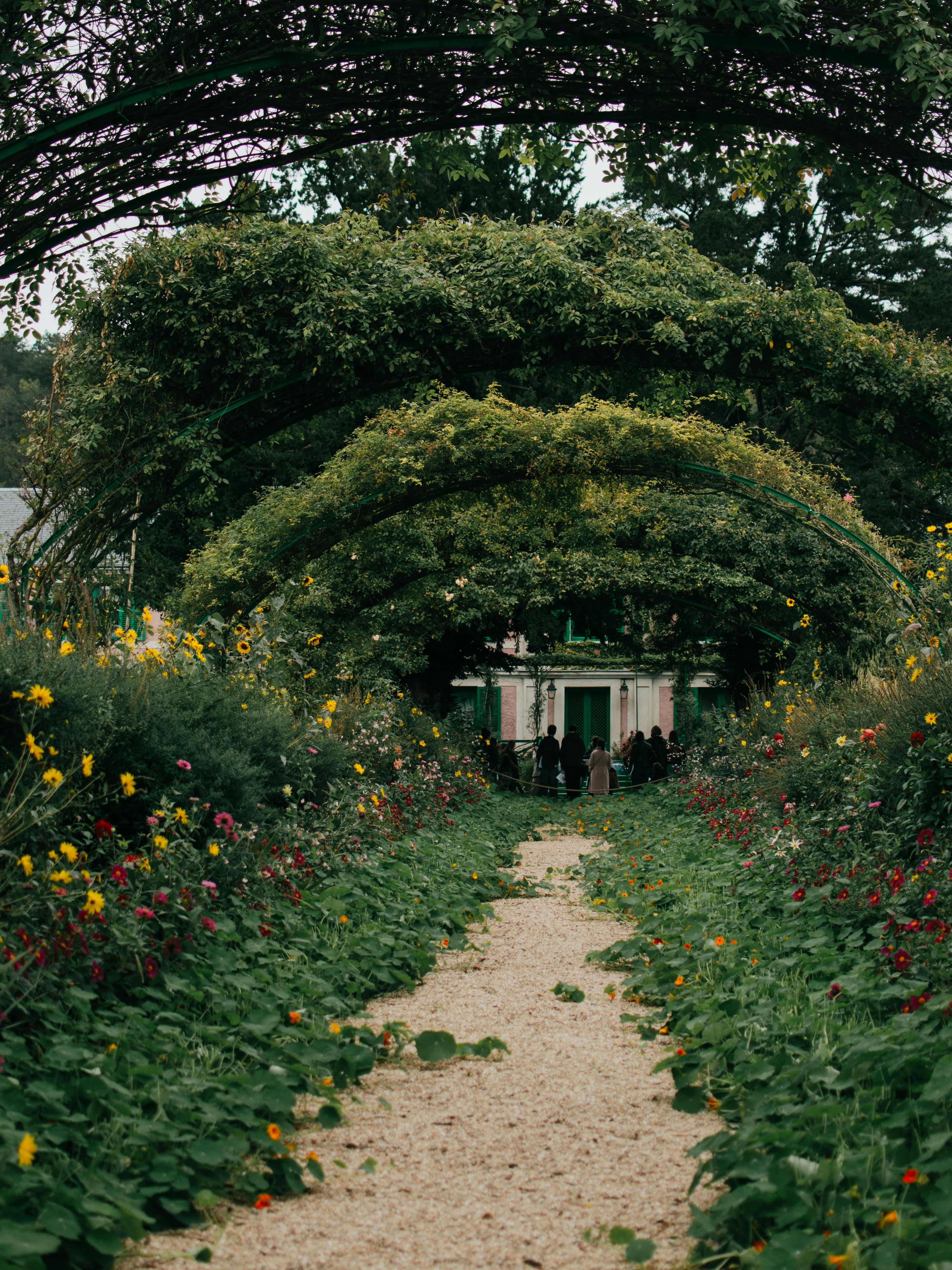
Giverny & Monet's Garden — The garden that Claude Monet created over forty years at his house in Giverny — the water garden, the Japanese bridge, the wisteria, the water lilies — is the most visited private garden in France and among the most beautiful in the world. A private visit before the garden opens to the public, arranged through our connections with the Foundation, offers the experience Monet himself would have known: the garden in the early morning, the light on the water, the silence.
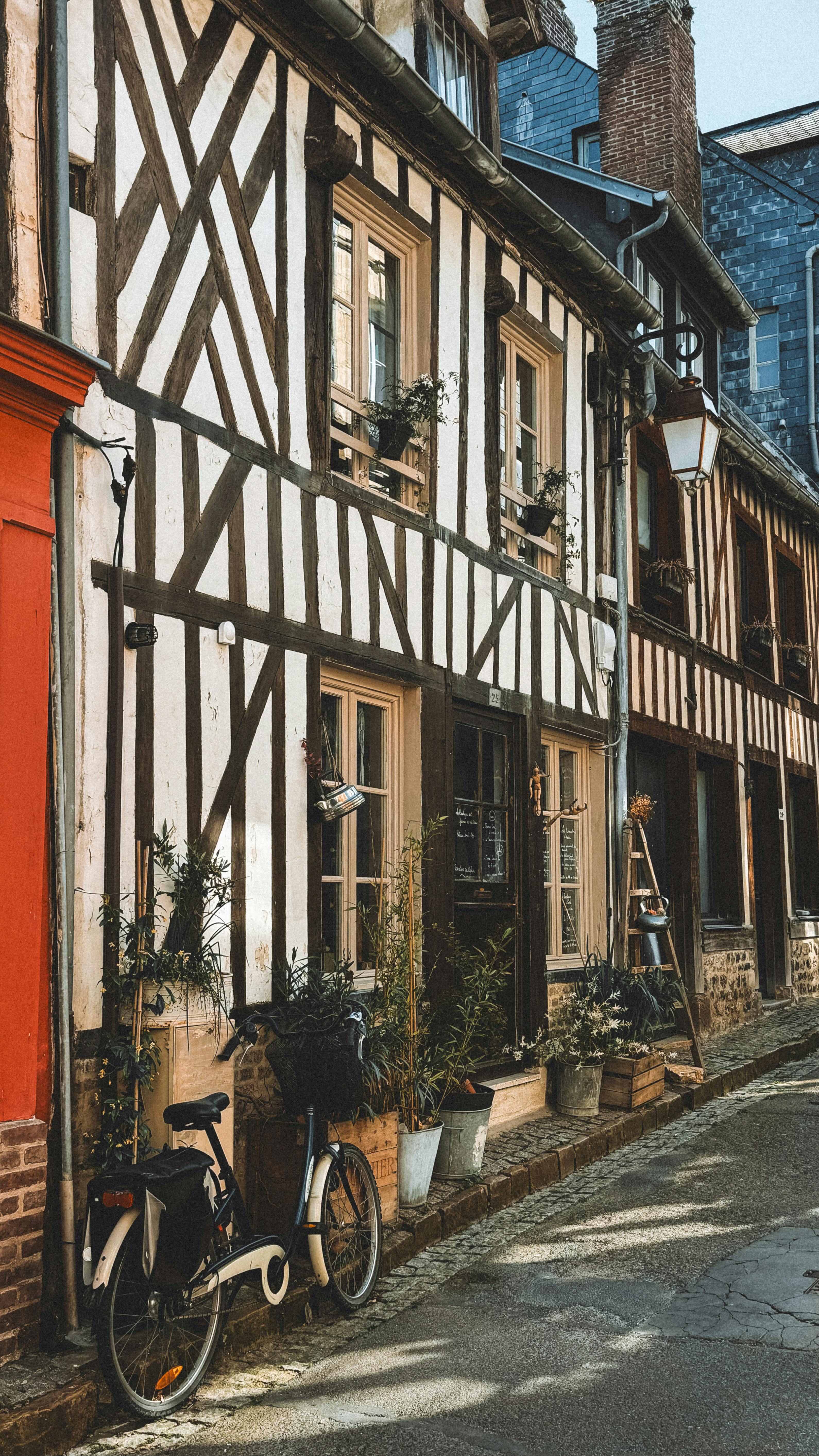
Honfleur & the Côte Fleurie — The old harbour of Honfleur, its slate-fronted houses leaning over the Vieux Bassin, is one of the most painted views in France — and still, somehow, more beautiful than any painting. The Eugène Boudin Museum. The half-timbered church of Sainte-Catherine, built entirely from wood by shipbuilders. And the light — the extraordinary quality of Norman light over the Seine estuary, which Boudin described as the most beautiful in France, and which Monet came here to study before he understood it well enough to go anywhere else.
Norman Gastronomy — Camembert de Normandie, made from raw milk from Normande cows, at its perfect point of ripeness. Livarot, the most pungent and the most magnificent of the Norman cheeses. Cidre bouché from the Pays d'Auge, poured from a bottle sealed with a cork. Calvados, aged twenty years in Limousin oak until it tastes of apple and autumn and patience. And the seafood of the Channel coast — the sole, the turbot, the scallops of Saint-Jacques — cooked simply and eaten with bread and Norman butter at a table where the tide is turning outside the window.

Where to Stay
Normandy's finest hotels share the quality of the region itself — a deep rootedness in history, an authenticity of character, and a hospitality that feels like the genuine article rather than a performance of it.
La Ferme Saint Siméon — Honfleur (5 stars, Relais & Châteaux) The most celebrated hotel in Normandy — and one of the most historically resonant in France. This 17th-century farmhouse above Honfleur was the gathering place of the Impressionists: Boudin, Monet, Courbet, Jongkind all came here to paint the light over the Seine estuary. The thatched cottage where they worked is now the main restaurant. Thirty-five rooms and suites of exceptional Norman character, beamed ceilings and wood-panelled walls, a spa and a garden that slopes toward the sea. To stay here is to sleep in a chapter of art history — and to understand, standing on the terrace at dusk, precisely why the Impressionists never wanted to leave.
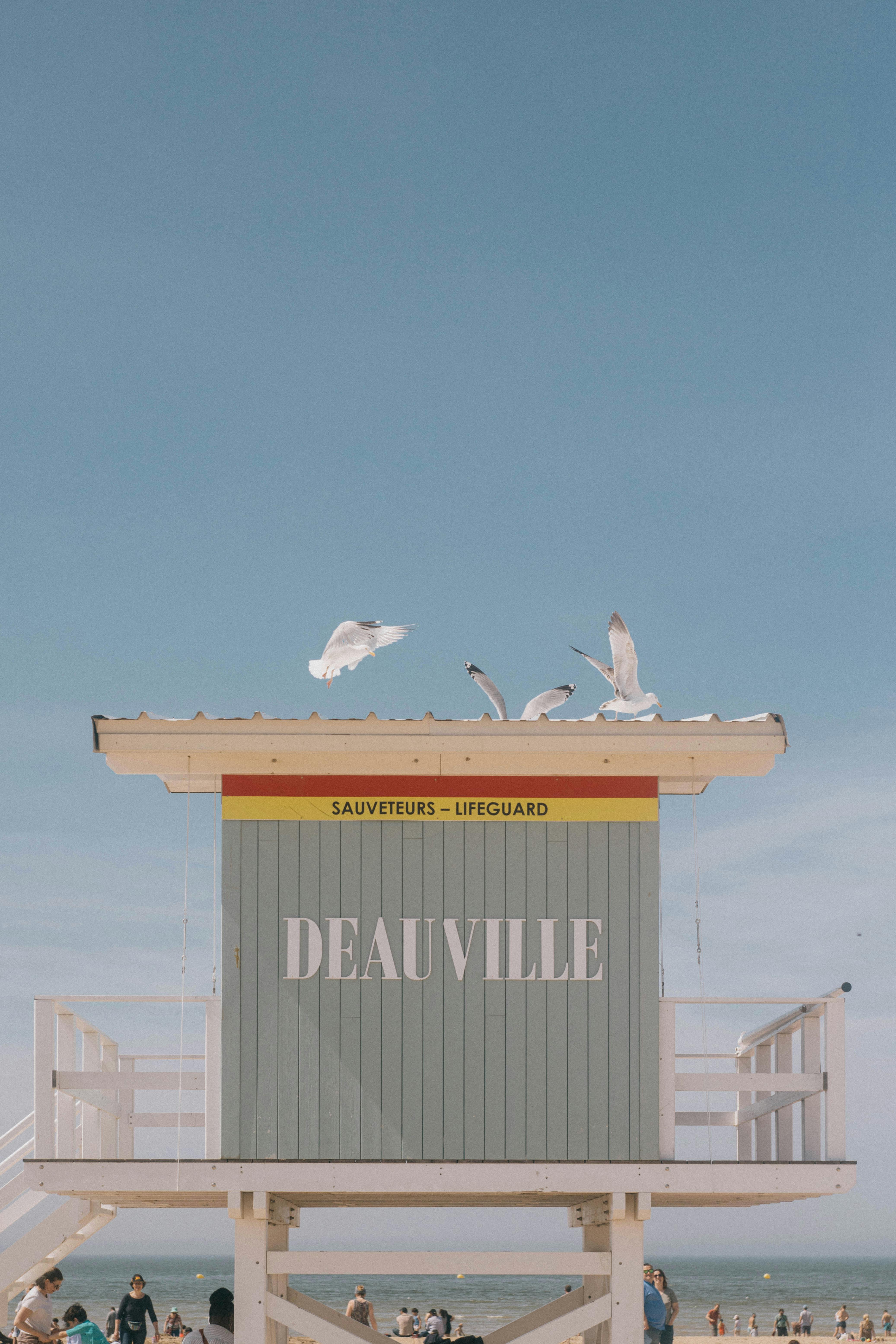
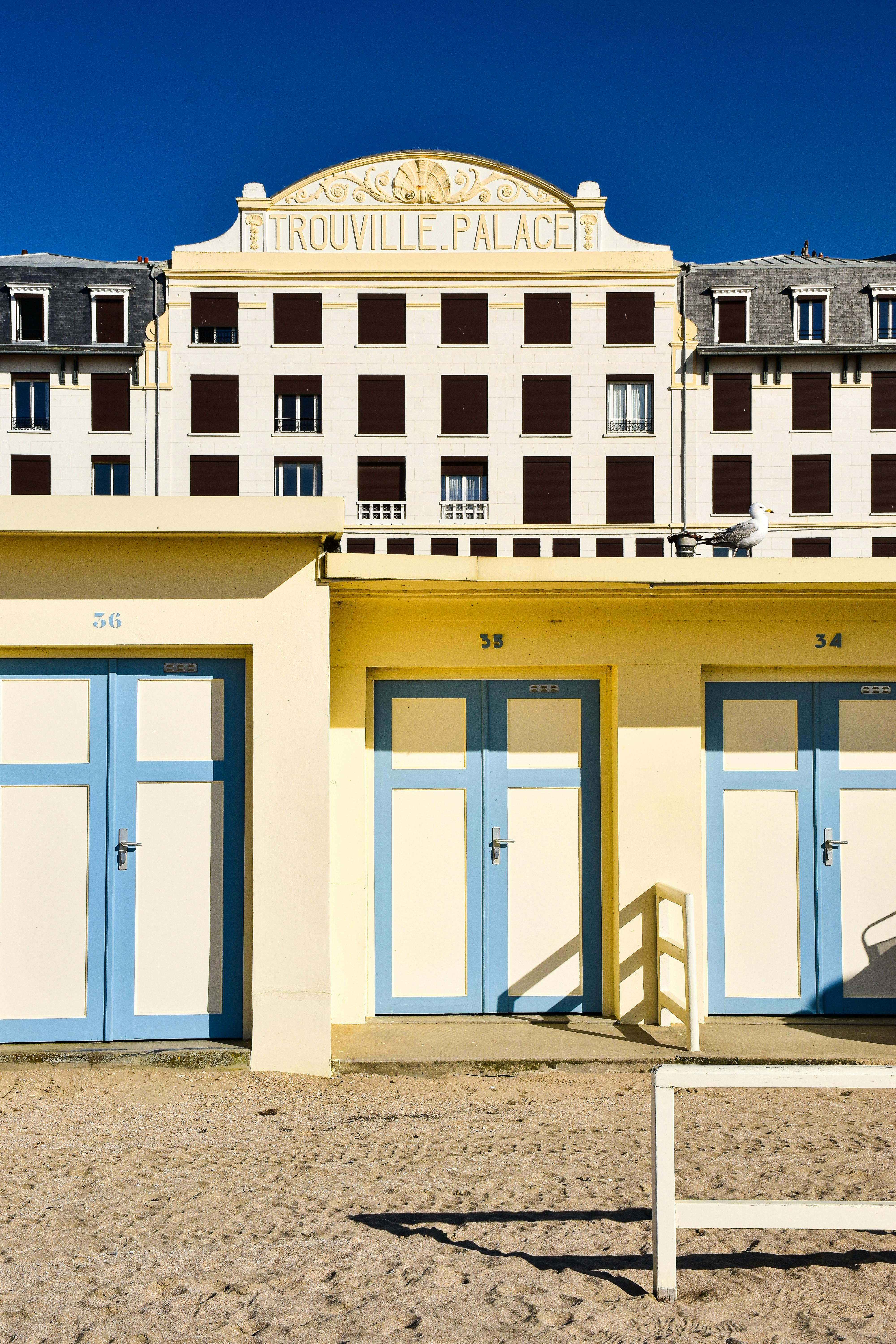
Hôtel Barrière Le Normandy — Deauville (5 stars) The grande dame of the Norman coast and one of the most iconic hotels in France — its Anglo-Norman half-timbered façade and flower-filled courtyard as immediately recognisable as the boardwalk it overlooks. A legend since 1912, when Coco Chanel made Deauville fashionable and the Normandy became her hotel of choice. Two hundred and sixty rooms and suites, a celebrated spa, a gastronomic restaurant of the highest quality, and the particular pleasure of Deauville itself — its races, its casino, its beach cabins in the colours of the French flag.
Château d'Audrieu — Audrieu (5 stars) A magnificent 18th-century château set within 25 hectares of gardens and parkland between Bayeux and Caen — the finest base in Normandy for visiting the D-Day beaches, just 15 kilometres away. A Historical Monument of exceptional elegance, with rooms and suites of considerable refinement, a gastronomic restaurant celebrated for its Norman cuisine, and a wine cellar of impressive depth. For those who wish to experience the history of Normandy from a setting of commensurate grandeur, there is no finer address.
Guy's Normandy Pick
Go to the American Cemetery at Colleville-sur-Mer on a weekday morning in September, when the summer visitors have gone and the light is soft and low over the Channel. Arrive before the gates open. Stand above Omaha Beach when the only sound is the wind in the grass and the distant breaking of the waves below.
The scale of what happened on this coast on June 6th, 1944 can only be understood here, on the ground, with time and silence. The nine thousand crosses receding in rows across the grass. The beach below, unremarkable in the morning mist. The distance from the waterline to the bluffs, which the men who survived described as the longest walk of their lives.
Then drive to Bayeux for lunch — the finest market town in Normandy, its medieval streets unchanged, its cathedral extraordinary, its cheese market worth the journey alone. Order the sole meunière. Drink the local cider. And give thanks, in whatever way feels right to you, for the generation that made the afternoon possible.
— Guy
The Safrans de France Experience
Our Normandy journeys are shaped by access to the region's most profound and most beautiful experiences — the ones that require the right knowledge and the right introductions to unlock fully.
A private guided day along the D-Day coast with a specialist military historian — visiting the sites in chronological order, understanding the strategic decisions, standing on the exact ground where history turned — that transforms a visit to the beaches from moving to permanently unforgettable. A private visit to Monet's garden at Giverny before the gates open, accompanied by an art historian from the Foundation. A morning with a calvados producer in the Pays d'Auge, tasting vintages from barrels that have been ageing since the 1970s, in a cellar that smells of everything Normandy has always been.
These are the Normandy experiences that endure — long after the journey home, long after the photographs have been filed away — as part of the permanent record of what it means to have been somewhere extraordinary and understood it completely.

France, delivered to your inbox
Stories, insights, and inspiration from the heart of France.